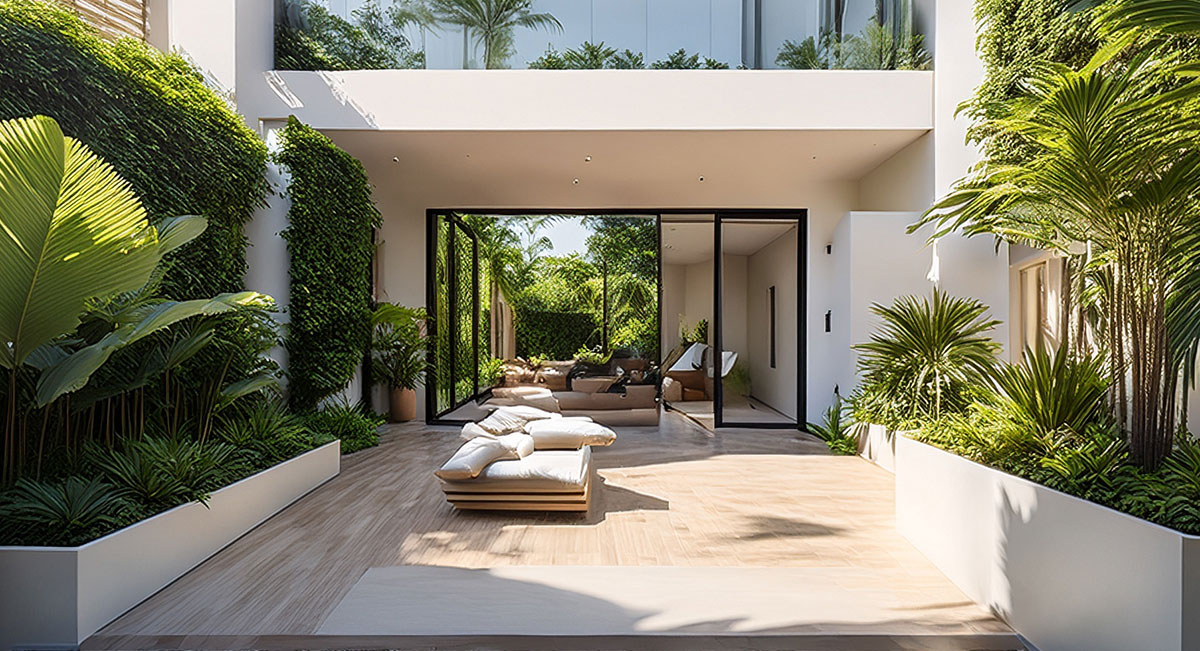
Why Courtyards Feel Right Again
I’ve noticed something shifting in Florida over the last few years. More clients are asking for courtyards, shaded garden rooms, and outdoor spaces that feel like real living areas. Not just a patio with a grill, but a place that holds you. A space that makes you want to linger even in July, even after a sudden rain, even when the sun hits hard.
Courtyards aren’t new here. They used to be a quiet cornerstone of Florida design. Old Sarasota homes, Spanish-style houses in St. Augustine, and even simple cracker cottages often had some version of a protected outdoor room. Then we drifted toward big open lawns and backyard decks that looked great on paper but didn’t always work in real weather.
Now we’re coming back to something smarter. We’re remembering that Florida living is outdoor living, but only if the space can handle heat, rain, and breezes without feeling like a battle.
Designing for How Florida Actually Feels
Subtropical weather is not polite. It is generous and intense at the same time. We get bright sun, heavy humidity, fast storms, and long shoulder seasons where the air is perfect. A courtyard should respect all of that.
When I design outdoor rooms here, I start with three truths:
- Shade matters more than square footage.
- Air movement matters more than furniture.
- Drainage matters more than almost anything else.
If you get those right, everything else becomes easier. The plants thrive. People stay comfortable. The space feels natural instead of forced.
Shade as Structure, Not Decoration
Shade is the backbone of a Florida courtyard. Without it, you are just building a hot plate. So I treat shade like architecture.
Native canopy trees are my favorite tools. They do more than cool the air. They set the mood. They define the ceiling of the room. A well-placed live oak or a gumbo-limbo can make a courtyard feel settled within a few years.
In tighter spaces, I use smaller native trees like Simpson’s stopper, dahoon holly, or wild tamarind. They filter light instead of blocking it completely. That dappled shade feels softer on the skin and it makes the space look beautiful all day long.
Clients sometimes want quick shade from big imported palms or fast-growing exotics. I get the appeal, but native canopy trees are built for this climate. They handle wind better, they recover faster after storms, and they support the wildlife that belongs here. Shade that lasts is always better than shade that rushes.
Cross Ventilation Makes a Courtyard Feel Alive
You can have a shaded courtyard and still feel uncomfortable if the air doesn’t move. This is where layout matters.
Think about the way the breeze travels. In Florida, we usually get sea breezes in the afternoon and land breezes at night. If the courtyard is boxed in with tall hedges or solid walls on every side, that air gets trapped. The space feels stagnant.
So I create openings. Maybe two sides are more protected, but one side has a low wall or a planted screen that lets wind through. I line up doorways and pathways so air can pass in a gentle corridor. Even a small shift in wall placement can change how a courtyard breathes.
On a recent project near the bay, we oriented the courtyard so it opened toward the southwest. The afternoon breeze came through almost like clockwork. The owners told me they stopped using their outdoor fan most nights. That’s the gold standard. When a space works with the wind, it starts to feel like part of the climate, not a shelter from it.
Building for Rain Without Losing Comfort
Florida rain can be a surprise guest. It shows up fast, hangs out loudly, and then disappears like nothing happened. A good courtyard should welcome that.
First, the ground has to drain. I use permeable materials wherever possible. Shell paths, gravel joints between pavers, and porous stone all help water sink in instead of pooling.
Second, I always give people a dry zone. That can be a pergola with a solid roof section, an overhang from the house, or a simple covered garden nook. You don’t need to cover everything. You just need a place to sit, read, or keep a drink dry while the rain passes.
Third, I design planting beds like little sponges. Rain gardens, swales, and slightly lowered planting zones catch runoff and filter it naturally. This keeps water away from the foundation and turns storms into a resource instead of a nuisance.
When a courtyard handles rain well, people don’t panic at the first drop. They just slide into the dry corner and enjoy the sound.
Low Water Planting That Still Feels Lush
A lot of people think drought-tolerant planting means dry-looking planting. That’s not true here. Florida natives can be lush without needing a daily hose.
In courtyards, I like layered planting. Low groundcovers like perennial peanut or dune sunflower. Mid-level color from firebush, beautyberry, or native lantana. Texture from muhly grass or saw palmetto. Then canopy overhead.
The key is using plants that like the same conditions. If you mix thirsty ornamentals with drought-tolerant natives, you end up watering for the thirstiest one, and everything else suffers. When the palette is unified, irrigation drops naturally.
I also use containers strategically. Pots let clients keep a favorite herb or a higher-maintenance accent plant without turning the whole courtyard into a water problem. A courtyard can hold both discipline and personality.
Courtyards as Daily Life, Not Special Occasions
One reason people are returning to courtyards is that they fit how we live now. We don’t just want a backyard for parties. We want a space for coffee in the morning, a quiet call in the afternoon, and dinner with friends at night.
A well-designed courtyard makes outdoor life easy. It’s close to the kitchen, protected from wind, cool in summer, and usable in winter. It becomes part of the floor plan.
I love when clients tell me their courtyard turned into the favorite room in the house. Not because it’s fancy, but because it works.
The Kind of Florida Luxury That Lasts
To me, the courtyard comeback is about maturity. Florida design is growing up. We’re learning that real comfort comes from respecting climate, not denying it.
When shade is built from native trees, when breezes are invited in, when rain is managed gracefully, and when planting is low-water but rich in texture, the space feels like Florida at its best.
The courtyard isn’t a trend. It’s a return to something we already knew deep down. Outdoor rooms are how this place wants us to live. All we have to do is design them honestly, and they’ll take care of us for a long time.